 |
| Right Choice in Water Management? |
As though reacting to the childish demands arising from some ignorant states, the omniscient central govt has proceeded to push its draft national policy on Water Management - purportedly tailored for the entire country. Not to mention that this presentation immediately drew flak from states that realized the Center's infringing in State affairs that this policy would lead to.
Fundamental Hydrological Impact
This draft of National Water Policy floated earlier this year was presented at the NWRC meeting recently, again chaired by Dr Manmohan Singh. It is said that although this policy allows States the right
[2.1] to frame suitable policies, laws and regulations on water; there is a felt need to evolve a broad over-arching national legal framework...But the policy's very existence remains questionable because of this allowance: If the States were allowed to make their own policies and ways of managing water, why did the Center have to intervene in this pure State item? The motivation for the entire central policy on water management seems to be this felt need for it. How is one expected to know who felt this need to evolve a national legal framework, and what is the basis to believe that this feeling is going to care for the interests of people in all States, like promised? And even if it did, why must the States bequeath this legislative exercise to a remote governing body and make a fundamental mistake in democracy? It is important to realize the invalidity of an over-arching legal framework of general water management principles across basin-levels - which is considered the basic unit in hydrological planning:
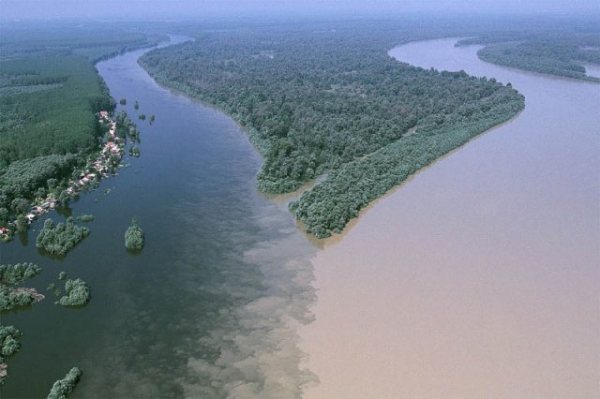
(vii) All the elements of the water cycle, i.e., evapo-transpiration, precipitation, runoff, river, lakes, soil moisture, and ground water, sea, etc., are interdependent and the basic hydrological unit is the river basin, which should be considered as the basic hydrological unit for planning.
 |
| (pic:thehindubusinessline.com) |
5.5 Inter-basin transfers are not merely for increasing production but also for meeting basic human need and achieving equity and social justice.This highly criticized approach of interlinking of water bodies like rivers is certainly not a good example to set for the whole nation, and certainly not the one to base State funding on. This inter-basin linking could raise dust in the international arena also, and cost India a fortune with little gain. Inter-basin transfers are known to disturb the delicate hydrological eco-cycle in the concerned river basins and could also render them useless in the long run.
Fiscal Deprivation
First at the NDC, now at the National Water Resources Council (NWRC): this sequence of appropriation of rights and duties raises the question if this was why we needed the GoI and this was why we needed a Prime Minister, then why at all did we elect our State legislatures and what was the need for our Chief Ministers? Such moves of the GoI are reducing our State Executives to mere stenography centers (taking dictation orders all the time) and more importantly, rendering out State Legislatures defunct. Such moves of the GoI are liable to receive public contempt for belittling people's immediate representative circle and appropriating its legislative rights and duties. States frequently seeking the Center's intervention in items best resolved within or between States is not a good sign to reckon with in the years to come.
In affairs like this one related to water management, where
The local communities have to be involved actively (in the management of water resources),it is surprising that the Center wishes to play an even more active role, so active that it can even deprive the States of the funds they will require to involve actively in water management. Don't the States deserve enough room for legal innovation, practical experimentation and debate among themselves before arriving at their own solutions? As per an official in the Water resources ministry at the Center about this Water policy:
Even though it won’t be mandatory, states will have to toe the policy’s guidelines to get central aid on water-related schemes. 'It will be a guiding document. Moreover, assistance to states under central water schemes will be given only in accordance with the water policy. States will have to align themselves with it.'So here is a central government that receives most of the taxes paid by people in different States, and then lays various conditions on the States when devolving money back to the States - which is ultimately where the tax moneys will have to be spent. This rather amusing but lossy arrangement of cash transfers between governments, coupled with the rather rude condition for returning money to the States, is not only increasing the latency for cash transfer to the final intended recipient, but also modifying the final intended recipient based on central policies and how well the States adhere to them.
This arrangement has created a deliberate government bias towards non-performing States at the cost of performing ones in the name of social equity. As feared, this leaves a huge burden on performing States and runs the risk of slowly swapping such States under the BIMARU definition. With institutions such as NDC & NWRC, this Center-heavy approach to Indian governance makes welfare appear to be a zero-sum game across different Indian States. Catering to one State's water needs by depriving another State of its deserving water needs is against the spirit of a union of federating States, and against the spirit of inclusive and sustainable growth.
(Also in this thread:
1. The Inclusiveness Story told on The Rapid Indian Railways
2. Moving the BIMARU under a Shining Skin)
