Centralized Democracy and Zero Sum Welfare Games

Right Choice in Water Management?
AFTER presenting draft policies for national development at the 57th NDC meeting, which in all measures appeared to solemnize appropriation of States' duties and powers by the Center, PM Manmohan Singh has now moved from discourse on fiscal management to a discourse on water management, this too at the national level! At this juncture it is necessary to realize that there is no other public good of more local relevance than water, and any such attempt at managing water so far removed from the river basin, borders on mis-management at best.

As though reacting to the childish demands arising from some ignorant states, the omniscient central govt has proceeded to push its draft national policy on Water Management - purportedly tailored for the entire country. Not to mention that this presentation immediately drew flak from states that realized the Center's infringing in State affairs that this policy would lead to.

Fundamental Hydrological Impact
This draft of National Water Policy floated earlier this year was presented at the NWRC meeting recently, again chaired by Dr Manmohan Singh. It is said that although this policy allows States the right
[2.1] to frame suitable policies, laws and regulations on water; there is a felt need to evolve a broad over-arching national legal framework...
But the policy's very existence remains questionable because of this allowance: If the States were allowed to make their own policies and ways of managing water, why did the Center have to intervene in this pure State item? The motivation for the entire central policy on water management seems to be this felt need for it. How is one expected to know who felt this need to evolve a national legal framework, and what is the basis to believe that this feeling is going to care for the interests of people in all States, like promised? And even if it did, why must the States bequeath this legislative exercise to a remote governing body and make a fundamental mistake in democracy? It is important to realize the invalidity of an over-arching legal framework of general water management principles across basin-levels - which is considered the basic unit in hydrological planning:
(vii) All the elements of the water cycle, i.e., evapo-transpiration, precipitation, runoff, river, lakes, soil moisture, and ground water, sea, etc., are interdependent and the basic hydrological unit is the river basin, which should be considered as the basic hydrological unit for planning.
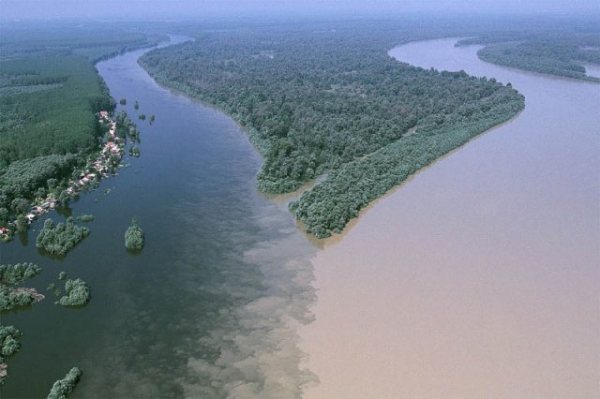
(pic:thehindubusinessline.com)
Further, in the name of enhancing water availability across the country, regardless of the geographical condition, need and potential to utilize water, this policy goes to the degree of envisioning inter-basin water transfers to achieve equity and social justice:
5.5 Inter-basin transfers are not merely for increasing production but also for meeting basic human need and achieving equity and social justice. 
This highly criticized approach of interlinking of water bodies like rivers is certainly not a good example to set for the whole nation, and certainly not the one to base State funding on. This inter-basin linking could raise dust in the international arena also, and cost India a fortune with little gain.  Inter-basin transfers are known to disturb the delicate hydrological eco-cycle in the concerned river basins and could also render them useless in the long run.

Fiscal Deprivation
First at the NDC, now at the National Water Resources Council (NWRC): this sequence of appropriation of rights and duties raises the question if this was why we needed the GoI and this was why we needed a Prime Minister, then why at all did we elect our State legislatures and what was the need for our Chief Ministers? Such moves of the GoI are reducing our State Executives to mere stenography centers (taking dictation orders all the time) and more importantly, rendering out State Legislatures defunct. Such moves of the GoI are liable to receive public contempt for belittling people's immediate representative circle and appropriating its legislative rights and duties. States frequently seeking the Center's intervention in items best resolved within or between States is not a good sign to reckon with in the years to come.

In affairs like this one related to water management, where
The local communities have to be involved actively (in the management of water resources),
it is surprising that the Center wishes to play an even more active role, so active that it can even deprive the States of the funds they will require to involve actively in water management. Don't the States deserve enough room for legal innovation, practical experimentation and debate among themselves before arriving at their own solutions? As per an official in the Water resources ministry at the Center about this Water policy:
Even though it won’t be mandatory, states will have to toe the policy’s guidelines to get central aid on water-related schemes. 'It will be a guiding document. Moreover, assistance to states under central water schemes will be given only in accordance with the water policy. States will have to align themselves with it.'
So here is a central government that receives most of the taxes paid by people in different States, and then lays various conditions on the States when devolving money back to the States - which is ultimately where the tax moneys will have to be spent. This rather amusing but lossy arrangement of cash transfers between governments, coupled with the rather rude condition for returning money to the States, is not only increasing the latency for cash transfer to the final intended recipient, but also modifying the final intended recipient based on central policies and how well the States adhere to them.

This arrangement has created a deliberate government bias towards non-performing States at the cost of performing ones in the name of social equity. As feared, this leaves a huge burden on performing States and runs the risk of slowly swapping such States under the BIMARU definition. With institutions such as NDC & NWRC, this Center-heavy approach to Indian governance makes welfare appear to be a zero-sum game across different Indian States. Catering to one State's water needs by depriving another State of its deserving water needs is against the spirit of a union of federating States, and against the spirit of inclusive and sustainable growth.

(Also in this thread:
1. The Inclusiveness Story told on The Rapid Indian Railways
2. Moving the BIMARU under a Shining Skin)

The Inclusiveness Story told on The Rapid Indian Railways

THE RECENTLY concluded 57th National Development Council witnessed Prime Minister Manmohan Singh noting some of his observations about inclusiveness in the Indian union. Going forward he noted that,
Rapid growth also contributes directly to inclusiveness because it provides greater access to income and employment opportunities. Policies aimed at stimulating growth in agriculture and in medium and small industries, combined with steps to promote education and skill development, will produce a growth process which is inherently more inclusive.
Rapid growth, as noted above, plays a vital role in achieving higher inclusiveness indeed. But the reason growth has to be rapid in order to achieve inclusiveness is that the whole process of inclusiveness, at a larger scale, is all about a race - race towards modernization, towards beating the one ahead of you. However, at an 'India' scale, which is large enough too, the race is towards relative modernization, and a race towards beating the State ahead of yours.

Competition is the essence of this race, and the Indian union has to allow this race to take place between Indian States. It cannot take part in the race as a proxy to the non-performing States, perhaps only to disprove the classical allegation that the the rich States got richer and the poor States got poorer. The central government need only be a neutral arbiter to ensure a fair race for all States, and perhaps protect, within reasonable limit, the interest of our States from out-of-scale competition from beyond the national borders. It is sad however, that the very existence of the Planning Commission and its modus operandi look oriented in such fashion so as to make Government of India (GoI) not only a lone proxy for all non-performing states, but also dictate terms of the race altogether! This is not only driving our States into a wrong race, but also jeopardizing their chances of winning the real race.

Railways Overloaded by being Indian?
There are many parameters that act as enablers for each competitor in this race. Today, most such parameters are either directly or indirectly controlled by the GoI. Take the railways for instance. It is shocking to know that the GoI has only added about 15% of rail lines in the last 62 years after having inherited the rest 85%. Railways, that have triggered rapid growth in many countries worldwide, have failed to do the magic in India, thanks to such a bulky administrative and governance juggernaut it is after being centralized in the hands of the GoI.

A general look at the pace at which railway projects are undertaken in India explains how railways could even be having a degenerative effect on growth. Specifically, this example of a railway line doubling between the cities of Mysore and Bangalore initially slated to take 24 months now remains doubtful of completion even after 42 months, quoting petty operational flaws as reasons:
However, if the state government hands over land in Mandya, Maddur and Srirangapatna, the work of electrification and doubling could be completed within six months, he added.
A perfect case for decentralization - Railways remains an unquestioned union list item and the States feature in the deal only when they have to part with their capital and revenue assets in the national interest of laying 10000 kms of railway lines in 62 long years! If that speaks about the inability of a central government in using railways to rapidly grow a vast diverse nation like India, the disturbing skew in delivery, of electrified rail in this case, between different States of India speaks for states like Karnataka and Gujarat that are begging for more efficient (electrified) mode of railway transport.

In a decentralized state of existence, each state would have paved its desirable set of internal rail network, meetings its own needs of rapid growth and competing at the global level.

Overall, it would be an over simplification of the inclusiveness problem to believe there can be one central authority (call it the Planning Commission) making an inclusiveness plan for entire of India. Development of this country is necessarily a cooperative endeavor involving the private and public sectors. Hence, it is important that the central government realizes that a cooperative endeavor cannot be undertaken with a hierarchical master-slave engagement between Central & State governments. The goal of future NDCs had better be to foster a peer relation between the governments and create a decentralized environment for this partnership to achieve rapid growth.

(Previous post in this sequence: Moving the BIMARU under a Shining Skin)

Moving the BIMARU under a Shining Skin

(pic: hindubusinessline.com)
IN his speech addressing the 57th National Development Council meeting of Chief Ministers from various Indian states, PM Dr Manmohan Singh yesterday (Dec 27 2012) made some observations of the state of affairs in the nation. Right from the fact that the invited Chief Ministers were not allotted enough time to speak it was clear how unmanageable and unfruitful any such conglomerate would be in this vastly diverse nation.

Among other things that he read out at this annual meeting, which is a brainchild of the Planning Commission of India, the Prime Minister (its chairman) morphed available data into potential dire situations, thereby passing subtle threats to the state Chief Ministers, and openly communicated the helpless stance the Government of India (GoI) might have to take in such situations. With such a choice of words the PM has both, taken up responsibilities that he need not (we'll come to that later), and dared the state CMs that he could pull the carpet beneath, leaving the states with very little scope to innovate, perform and deliver to people belonging to their states. By doing so, the PM, representing the GoI indirectly assumes sole responsibility of the people of each state, bypassing the state governments, and thereby violates the very federal spirit this nation would like to adopt in its democracy.

An excerpt of Dr Manmohan Singh's speech goes like this:

While we need to accelerate growth, we do not view growth as an end in itself. Our real objective must be to improve the condition of lives of the aam aadmi, which is why we emphasise that growth must be inclusive.

There are two reasons why rapid growth is necessary to achieve greater inclusiveness. First, it is necessary to generate the revenues to finance our many programmes of inclusiveness. If growth slows down, neither the States nor the Centre will have the resources needed to implement inclusiveness programmes. We will either be forced to cut these programmes, or be pushed into tolerating a higher fiscal deficit, which will have other negative consequences.

As we shall see in the parts to follow this post, the GoI headed by the PM must realize that in a federal democratic set up, delegation of responsibility of governance is from the states toward the center and not vice-versa. Meaning, the center cannot assume every responsibility there is, and then devolve them to the states to tackle. For instance, in a truly federal set up the states need not, and cannot afford to, give up the task of increasing inclusiveness to the center. Given the amount of diversity in the nation, in various walks of life, the role of GoI should be limited to understanding the fact that achieving inclusiveness at a national level is not the way to go at all, and in turn support policy making at state-level to enhance inclusiveness within each state. Any attempts made at the national level in this regard will only roll on the title of BIMARU states from one pack to another! In fact this very phenomenon of moving the BIMARU underneath a "shining India" has perhaps been wrongly interpreted by the PM in the same speech:
States that used to grow slowly in earlier periods have done much better. The average growth rate of the five poorest states exceeds the national average for the first time in any Plan period. I think we may be reaching the stage when the term “BIMARU States” can be relegated to history.
What can be relegated to history and what is indeed running the risk of getting relegated to history, and other analyses will be seen in following posts.